
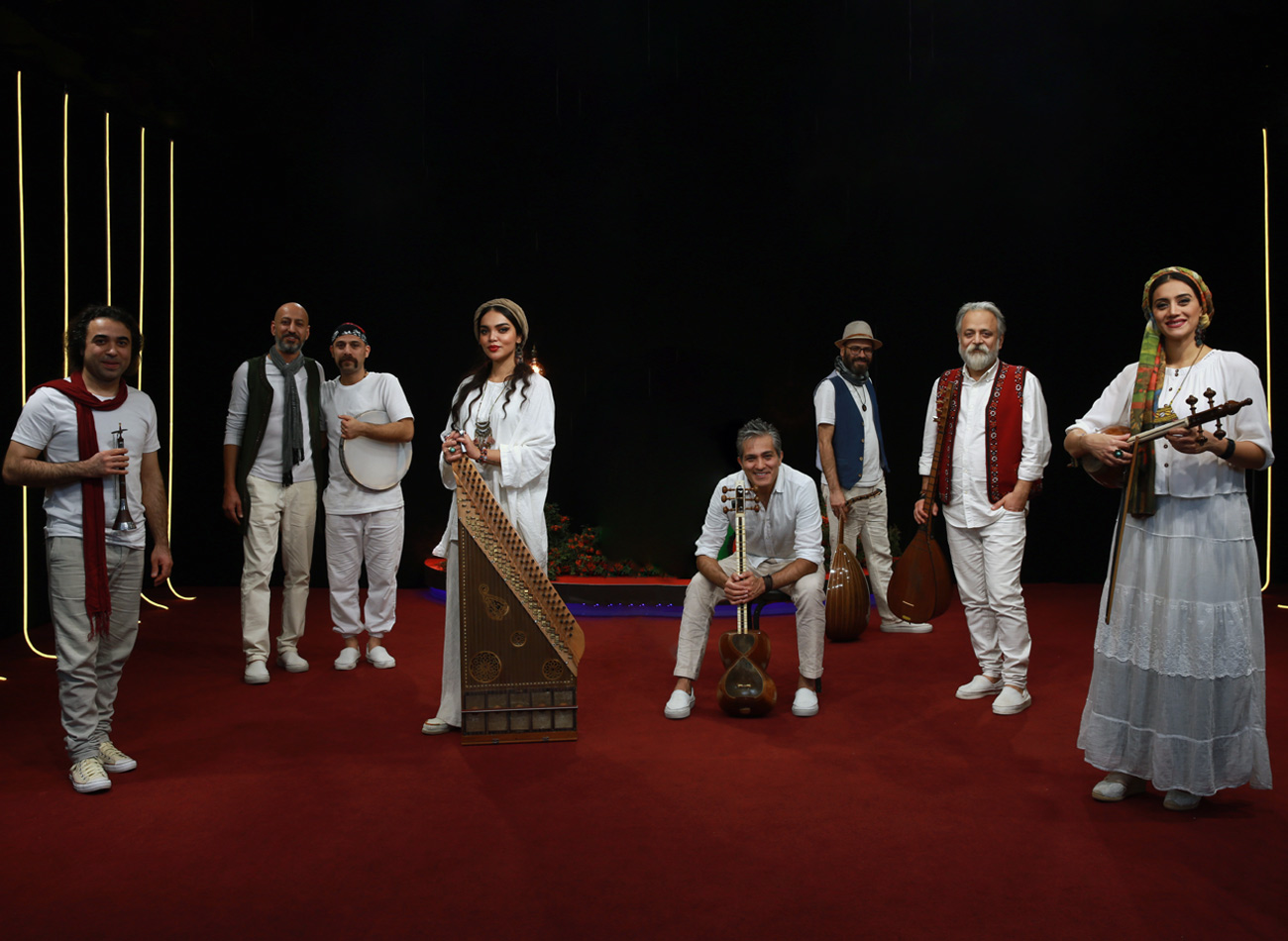
We incorporate language, culture & history, merging traditional instruments and forms with contemporary rhythms.
[vc_row enable_arrows_animation=”no” css=”.vc_custom_1666682698713{padding-bottom: 2% !important;}”][vc_column][vc_column_text]
An interview with the RASTAK MUSIC GROUP, Globally Revered Folk Musicians
[/vc_column_text][vc_row_inner css=”.vc_custom_1624007608524{padding-top: 3% !important;}”][vc_column_inner][vc_column_text]
IN THIS INFORMAL CONVERSATION WITH INDIAN SOUNDS & STEPS, RASTAK OPENS UP ON THEIR EVENTFUL, YET ARDUOUS JOURNEY THAT MADE THEM A MATCHLESS FLAGBEARER OF FOLK MUSIC. THE CONVERSATION WILL ALSO GIVE YOU MORE THAN A GLIMPSE OF THEIR INDOMITABLE PASSION TO REJUVENATE AND POPULARISE MIDDLE EASTERN, ESPECIALLY IRANIAN FOLK MUSIC, AND The PAINSTAKING INITIATIVES THAT GOES INTO IT. READ ON!
[/vc_column_text][vc_separator css=”.vc_custom_1666681089001{padding-top: 3% !important;padding-bottom: 3% !important;}”][vc_column_text]EDITOR’S NOTE: The Rastak Music Group is one of the most well-known bands in Iranian contemporary folk music, which was formed as an experimental music group in 1997. The group seeks to collect, record, and interpret Iranian folk music for a global audience. Rastak incorporates language, culture, and history, merging traditional instruments and forms with contemporary rhythms.
Since the beginning of its journey, Rastak has been collaborating with great musicians from different cultures. It has been touched with an ethnomusicological approach, as most members are university graduates majoring in music. Its experimental music works of art, its deep research and fieldwork has focused on the sonic features of Iranian folklore and its diverse multicultural ethnic groups resulting in different compositions like movie soundtrack, theatre text music, six music albums and eight single tracks.
Rastak has performed in many international music festivals and concerts held in Iran, England, Austria, Germany, France, Italy, Spain, The Netherlands, Sweden, the United States, Canada, Australia, India, Japan, Malaysia, Chile, Poland, Turkey, Georgia, Belgium, Oman, Belarus, Kazakhstan, Bangladesh, Iraq, Erbil, and United Arab Emirates, among others.[/vc_column_text][vc_separator css=”.vc_custom_1624010429324{padding-top: 3% !important;padding-bottom: 1% !important;}”][vc_column_text]
READ THE RASTAK MUSIC GROUP INTERVIEW
IS&S: The first thing that strikes about the Rastak Music Group’s performances or music, is the deep passion you bring into it, the honest emotions that flow from yourselves, and the way you enjoy your performing arts. You also manage to bring out similar emotions from your audience and listeners. Is this to do with the pristine Iranian folk music, or your passion for it or something else?
Rastak: Finding an exciting and engaging career path is one of the things that make people enjoy their life and work. We are grateful that we have found ours. We at Rastak believe it is essential to feel like we are making a difference in the world and doing something purposefully. As a group, our work intertwined with our daily life. We enjoy being and working together in rehearsals, performances, and recording sessions.
For us, ethnic music is more than just a genre. It is a social phenomenon with social functions. It is a passion passed down from generation to generation by our predecessors. This passionate art form originated in different regions in Iran and has been spreading joy, sorrow, excitement, and calmness ever since.
We’re passionate about our music because it’s a part of who we are. It’s our identity. After years of rehearsals and performances, this passion has become part of our performance personalities. We put our entire heart and soul into the performance on stage or in the studio. We want to pass down our love of the music to our audiences, and the audiences also feel the warmth and can’t help but be drawn into the show.
“Music is a powerful force for good in the world and can help build friendships and promote peace.”
IS&S: What are the most significant contributions of Iranian folk music to the global music world? And what role has the Rastak Music Group played in it?
Rastak: Some of the most significant contributions of Iranian folk music to the global music stage include the development of the maqam system, the use of microtones, and the influence on various genres such as Sufi music and classical Persian music. Iranian folk music has also been influential in developing pop music in the region, particularly in Afghanistan and Pakistan.
We at Rastak have researched Iranian ethnic music extensively for more than 25 years. Rastak seeks to collect, record, and interpret Iranian folk music for a global audience. We are incorporating language, culture, and history, merging traditional instruments and forms with contemporary rhythms. Since the beginning, we have been trying to combine the well-known regional sounds with those less well-known ones to shorten the generational gap and create a geographical bridge in the music of Iran. We utilize ethnic-based melodies with our specific arrangement to connect with a broader range of audiences worldwide. We managed to release 6 albums and some singles as follows.[/vc_column_text][/vc_column_inner][/vc_row_inner][/vc_column][/vc_row][vc_row enable_arrows_animation=”no” css=”.vc_custom_1666682812258{border-bottom-width: 5% !important;background-color: #ededed !important;}”][vc_column width=”1/2″ css=”.vc_custom_1666682832652{margin-bottom: 5% !important;padding-left: 5% !important;}”]
Albums
- Ancient Hues – 2007
- All My Homeland People – 2010
- Sorna-ye Norouz – 2013
- Among Eternal Suns – 2016
- Bahar – 2018
- Dance With Rastak – 2021
[/vc_column_text][/vc_column][vc_column width=”1/2″ css=”.vc_custom_1666682756904{padding-right: 5% !important;}”]
Singles
- Borderless at Home (Project) 2019 – 2020
- Sombre Sky – 2021
- Bir Yangının Külünü – 2022
- Tehna – 2022
[/vc_column_text][/vc_column][/vc_row][vc_row enable_arrows_animation=”no”][vc_column][vc_column_text]Today, Rastak is known as the global ambassador of Iranian folk music, and we believe that music is a powerful force for good in the world and can help build friendships and promote peace. We are trying to show the world our culture through the beauty of Iranian music and the diversity of Iranian musical instruments.[/vc_column_text][vc_row_inner css=”.vc_custom_1666686866167{padding-top: 5% !important;padding-bottom: 3% !important;}”][vc_column_inner]
RASTAK MEMBERS
Siroos Sepehri: Band director, Tar player
Seyed Farzad Moradi: Vocalist, Multi instrumentalist
Seyed Behzad Moradi: Vocalist, Percussionist
Dina Doosti: Kamancheh, Kamancheh alto
Majid Poosti: Percussions
Akbar Esmaeilipour Farsangi: Tar, Setar, Oud
Sahar Rashidi Torbati: Qanun
Hamed Bolandhemmat: Wind instruments
[/vc_column_text][/vc_column_inner][/vc_row_inner][/vc_column][/vc_row][vc_row enable_arrows_animation=”no”][vc_column][vc_column_text]
“The willingness to experiment and try new things unleashes our creativity”
IS&S: 25 years, and you are still getting stronger by the day. What is the secret behind your longevity and huge success?
Rastak: There’s no one-size-fits-all answer to this question. There have been many influential factors behind Rastak’s longevity and success. Among those, excellent and intelligent management is undoubtedly a key ingredient. Siamak Sepehri, our band director, studied music at the Faculty of Fine Arts of Tehran University and is one of the leading composers of Iranian music. He creates an atmosphere for all the group members to present their creativity. So, the group members always consider themselves the owners of the group and freely develop ideas in line with the group’s goals. In a nutshell, the group’s works result from collective wisdom.
Siamak also involves the members in decision-making, which helps build trust and commitment. All of the above makes Rastak a family, not just a music group.
Forming a music band is a lot like starting a family. You have to find the right people who are compatible and share the same vision. Once you find the right people, you must work together to make the music happen. It takes a lot of hard work, dedication, and communication to make a successful music band. But when it works, you can share your passion for music and create something special together.
Another key to success is Rastak’s independency. Being independent gives us complete control. We can decide what songs to release, when, and how to market ourselves. And all of this allows us to build a loyal fan base and create a unique identity. We have never been dependent on any government or private sector from the beginning. Despite the group’s financial problems, we tried to maintain our financial and operational independence during these years. And we cannot do it without implementing a system with financial and business discipline, which we believe is exemplary for music groups.
We also are always looking for new ways to improve our music and performance. This willingness to experiment and try new things unleashes our creativity. It sets us free of any boundaries which might limit us.
Last but not least, the group’s members are passionate about Iranian folk music and are committed to their culture. They are willing to sacrifice personal interests for the good of the group.
Because of all the above, Rastak’s members strongly bond with each other on and off stage.
“We are always moving in new and unplanned directions, constantly exploring new things and pushing the boundaries of what is possible.”
IS&S: Your group was founded with the dream to bring to the global audience a unique blend of contemporary Iranian folk and musical traditions of the country’s diverse communities. To what extent have you succeeded, and how would you describe the road ahead?
Rastak: From a technical point of view, combining two or more distinct music genres with different functions was difficult. To do this, we tried to think outside the box and borders and sometimes used non-Iranian instruments in the band’s orchestration.
One of the challenges of bringing these two kinds of music together is the different tunings used. Eastern music often uses just intonation, which means that intervals are based on the harmonic series. That can be challenging when trying to play western instruments, which are typically tuned to equal temperament. Also, eastern music often uses smaller microtones or intervals than what can be played on a western musical instrument, like the Koron*. That is very challenging when trying to create a melody that is both eastern and western sounding. Additionally, the two musical traditions have different approaches to rhythm and timing, which can also create challenges when trying to create a cohesive sound.
As you know, Eastern music is typically monophonic. It means that only one melodic line, or “voice,” is played at any given time. That is in contrast to music from the Western world, which is often polyphonic. Bringing these two kinds of music together is another challenge we could overcome.
With musical instrument makers’ help, we could manage to modify some of the ethnic instruments. We had to adjust the intervals to the extent that would not damage their authenticity and not create any dissonance in the harmonies.
It is fascinating to witness our music connect with both groups. We are hopeful for the future, and our audience is increasing daily, and the group’s efforts over the years are slowly achieving excellent results. Nowadays, we have fans and audiences from all over the world. People around the world with different cultures and backgrounds received our music well.
Rastak considers itself an experimental music group. We are always moving in new and unplanned directions, constantly exploring new things and pushing the boundaries of what is possible. We didn’t have the luxury of having a role model group to follow. We have always tried to set and maintain our standards at the highest possible level and have tried our best to produce quality music. Although it was initially challenging to get results from such activities, we have achieved good long-term results.
IS&S: Rastak’s performances often feature a very wide range of Iranian percussion, string as well as wind instruments. How unique are these instruments as compared to similar instruments across the world? Also, do you tweak or modify these instruments to suit contemporary requirements?
Rastak: Most ethnic musical instruments are traditionally made from natural materials such as skin, horns, animal bones, wood, or reeds. Many musical instruments are used only in the limited geography due to their region’s biodiversity and diversity of vegetation. Most of these instruments are unique. However, you can find similar ones in countries with the same natural landscape.
Iran is one of the countries located on the Silk Road. The country was a key player in the trade of goods and ideas between Asia and the Mediterranean. The Silk Road significantly influenced the cultural exchange between Iran and other countries. As a result, instruments have made their way from Iran to other countries and vice versa.
Rastak is the first Iranian music group to put all these instruments together and practically use them in their orchestra. We try to make slight changes in the musical instruments. It is necessary to make some changes to standardize the musical instrument used in the orchestra sometimes. For example, we should make slight changes in the intervals to avoid any dissonance tone.
IS&S: ‘Fusion’ in performing arts, whether in dance or music, is fast gaining popularity globally as the world is getting more digitized and interconnected; there is also money in it. You also see plenty of partnerships between artists of different genres. What’s your take on this, and how is Rastak poised to take on this trend?
Rastak: Fusion arts can create new and innovative art forms from two different genres. That can help bring different cultures together. However, it is not that simple. Artists who are involved in a fusion art form need to have a significant research-based background. They should understand others’ works and the cultural movements that triggered these artists to produce them. Otherwise, it is almost impossible to create a good fusion piece without compromising the integrity of the individual art forms.
We at Rastak, as an experimental music group, are always open to new ideas and collaborations with established artists, even in different genres. Cross-genre in art can benefit artists because it allows them to experiment with different types of music and create something unique that may appeal to a broader range of people.
As I mentioned, Rastak music brings two kinds of music together with different approaches to rhythm, timing, and harmony. And this is cross-genre fusion music. Besides, we infused electronic music and its element into Iranian folk music and made some music in the past. We coined the term “Folktronic” in the early days of Rastak. You can still find some of those works on our Soundcloud[1]. Our latest single, Tehna’s arrangement, is based on Rastak’s experiences combining electronic and Iranian ethnic music.
IS&S: Women musicians have always played important roles in Rastak. This must be truly inspiring for other aspiring women artists in your region who want to pursue their artistic passion.
Rastak: Unfortunately, Iran’s government creates many obstacles to women’s activities in art, especially music. We have fought against this problem for years and endured many difficulties. Despite obstacles, we have been among the few groups that included female artists in our band during the 25 years of our activity.
We are delighted to see that the presence of talented female musicians in Rastak has inspired Iranian girls and created a lot of enthusiasm among female artists and musicians in Iran. Nowadays, we see the company of female musicians and singers in most Iranian bands.
IS&S: How did Rastak cope with the Covid-19 pandemic? What was your learning experience during this period?
Rastak: The Covid-19 pandemic profoundly affected the whole music industry. All the concerts and music festivals were canceled or postponed, and many music venues closed their doors. That devastated many musicians, including Rastak.
We lost a significant income because many live performances were canceled or postponed. However, we have been able to adapt and find new ways to prevail. For example, we have started streaming our live performances online, and that has allowed us to generate some income and survive.
In addition, we had a chance to spend time releasing our album, Dance with Rastak, specifically for the pandemic. Releasing an album can be a costly endeavor. The cost of recording, mixing, and mastering the album can add up quickly. If you are not signed to a record label, you will likely have to cover these costs yourself. We had to be creative to fund the album, and we tried to reach out to our fans worldwide and crowd fund. We developed a crowdfunding website and invited our fans to pre-order the album. It was our most significant achievement when our fans reached out and pre-order the album worldwide. The pandemic taught us that the world is smaller than we think.
In the meantime, we started working on our online presence to promote ourselves as much as possible, which helped us connect with our fans worldwide and even reach more fans in new and innovative ways. It opened up new opportunities for us to pursue our international activities more seriously.
Last but not least, during the pandemic, we decided to migrate to Turkey, which was one of our most significant decisions as a group.[/vc_column_text][vc_row_inner css=”.vc_custom_1624012669427{padding-top: 3% !important;}”][vc_column_inner width=”1/2″][vc_single_image image=”12150″ img_size=”450×350″][/vc_column_inner][vc_column_inner width=”1/2″][vc_column_text]
“The best way to preserve folk music is to change their functionality, update them, and align those with modern life.”
IS&S: What advice would you like to give on how to preserve and promote original folk music of the world, irrespective of the country concerned?
Rastak: Folk music has particular authenticity everywhere in the world. One of the essential features of folklore music, as one of the important cultural elements of human societies, is its social function. This music has emerged from the heart of the community, preserved by the masses, and polished over time.[/vc_column_text][/vc_column_inner][/vc_row_inner][vc_row_inner][vc_column_inner][vc_column_text]The presence of music on many occasions, celebrations, sacred rituals, work rituals, and even mourning shows the importance of music in ethnic cultures. Due to changes in our social lives caused by modern life, some music gets isolated because we no longer practice those rituals.
The best way to preserve them is to change their functionality, update them, and align those with modern life. We need to give this music new definitions and make new interpretations. That can help those to remain.
Musicians must study the issue from a different perspective, sociological and cultural point of view, to keep these kinds of music dynamic and active. Otherwise, at best, that music can be regarded as an antique item in a museum.
IS&S: Can you please give our readers a glance at our upcoming projects and initiatives?
Rastak: In the coming years, especially in 2023, we look forward to attending world music festivals and promoting and introducing our music. Music festivals can help us reach more audiences and expose us to new fans who may not have otherwise heard our music. In addition, it can also help to generate buzz and excitement, which can lead to media attention.
In the meantime, we are working on “Borderless at Home.” In this project, we are working on the music of Iran’s neighboring countries to be a messenger of peace while depicting the beauty of Middle Eastern music and culture. We are in Istanbul and plan to study Turkish music more closely now. We have already met a lot of good artists, and we look forward to collaborating and working with them. We plan to expand this cooperation to other countries.
We love to know more about Indian music and culture, and we are proud that we have many fans in India who follow us on our social media and listen to our music. We hope we can have a concert in beautiful India, and maybe we will be honored to perform with your artists. We are looking forward to it. Long live beautiful India.[/vc_column_text][/vc_column_inner][/vc_row_inner][vc_separator css=”.vc_custom_1624011263768{padding-top: 3% !important;padding-bottom: 3% !important;}”][/vc_column][/vc_row][vc_row enable_arrows_animation=”no” css=”.vc_custom_1474355814165{padding-bottom: 10px !important;}”][vc_column][vc_column_text]
CONNECT WITH RASTAK ON
YouTube | Facebook | Instagram | Spotify | Deezer | Apple Music | Official Website | Wikipedia
DID YOU LIKE THIS ARTICLE? WRITE TO US AT
support@indiansoundsandteps.com
[/vc_column_text][/vc_column][/vc_row]